

Best Way to Store Fragrance Samples
Table of Contents
- Why Proper Storage Matters for Fragrance Samples
- Step 1: Choose the Right Storage Location
- Step 2: Protect Your Samples from Heat and Light
- Step 3: Control Humidity Levels
- Step 4: Keep Vials Sealed and Upright
- How to Organize Perfume Samples for Easy Access
- Can Perfume Samples Go Bad and How Long Do They Last
- Choosing a Perfume Sample Organizer
- Frequently Asked Questions
Last Updated: October 14, 2026
Why Proper Storage Matters for Fragrance Samples
Fragrance samples are delicate. They're smaller than full bottles, which means they have a higher surface-area-to-volume ratio. This makes them more vulnerable to evaporation, oxidation, and degradation from light and heat exposure.
The best way to store fragrance samples starts with understanding what damages them. Heat breaks down fragrance molecules. Light causes chemical reactions that alter the scent. Humidity and air exposure speed up oxidation. When you store fragrance samples carelessly, you're essentially watching your investment deteriorate in real time.
The good news: proper storage is straightforward. A few simple steps protect your collection and keep every sample fresh for months.
Step 1: Choose the Right Storage Location
The location you choose matters more than you might think. Your fragrance samples need a cool, dark, stable environment. Think of it like this: the cooler and darker the space, the longer your samples last.
Best storage locations:
- A closet away from windows
- A dark drawer in a bedroom or living room
- A cabinet in a hallway
- A storage box in a temperature-controlled room
Avoid these locations:
- Bathroom shelves (humidity spikes when you shower)
- Kitchen cabinets near the stove (heat damage)
- Windowsills (direct sunlight)
- Near air vents (temperature fluctuations)
- Bedside tables exposed to morning light
Temperature stability matters as much as coolness. Avoid places where the temperature swings wildly between day and night or season to season. A consistent 60-70°F is ideal. If your home stays warmer, find the coolest room available.
Step 2: Protect Your Samples from Heat and Light
Heat and light are the two biggest enemies of fragrance samples. They work together to break down fragrance compounds, which changes the scent and reduces longevity.
Protect from heat:
- Keep samples away from radiators and heating vents
- Don't store near appliances that generate warmth
- Avoid areas that get direct sunlight during the day
- Keep samples away from electronics that run hot
Protect from light:
- Store in opaque containers or boxes
- Use dark-tinted glass or plastic storage boxes
- Keep samples in a drawer or cabinet with the door closed
- If you use a shelf, cover it with a dark cloth or box
Direct sunlight is especially damaging. Even a few hours of afternoon sun can noticeably alter a fragrance. If you want to display your collection, use UV-protective glass or keep samples in tinted bottles rather than clear ones.
Temperature fluctuations matter too. If your samples sit in a warm room during the day and a cold room at night, the liquid inside the vial expands and contracts. This creates micro-gaps where air enters, which speeds up oxidation. Consistency beats perfection here, a cool closet that stays 65°F all year is better than a room that swings from 55°F to 75°F.
Step 3: Control Humidity Levels
Humidity is often overlooked, but it directly affects how long your samples last. Too much humidity and you risk mold or damage to labels. Too little and you risk faster evaporation in certain vial types.
Target humidity range: 30-50% relative humidity is ideal for fragrance storage.
Most homes naturally fall into this range, especially in bedrooms and closets. Bathrooms are the exception, humidity spikes to 70-80% after showers, which is why they're terrible for fragrance storage.
Ways to manage humidity:
- Store samples in a dry room away from bathrooms
- Use silica gel packets in your storage box if you live in a humid climate
- Avoid basements, which tend to be damp
- Check your storage area occasionally, if it feels damp, move your samples
If you live in a very humid climate, consider adding a small silica gel packet to your storage container. These absorb excess moisture and cost just a few dollars. Replace them every 6-12 months.
Step 4: Keep Vials Sealed and Upright
How you position and seal your samples matters. Sealed vials protect the fragrance from air exposure. Upright positioning prevents leaks and keeps the cap from drying out.
Sealing best practices:
- Always keep caps tightly closed when not in use
- Check caps occasionally to ensure they're secure
- If a cap feels loose or damaged, transfer the sample to a new vial
- Never leave samples sitting open, even for a few minutes
Positioning matters:
- Store vials upright, not on their side
- Upright storage prevents liquid from touching the cap
- This keeps the cap from drying out or corroding
- Upright positioning also reduces evaporation
Some spray vials have plastic or rubber components in the cap. If liquid touches these parts for extended periods, they can degrade or create a seal that fails. Upright storage prevents this.
If a vial starts leaking, address it immediately. Transfer the remaining fragrance to a new, clean vial with a tight seal. Leaking samples lose potency fast and can damage other samples nearby.
How to Organize Perfume Samples for Easy Access
Organization makes the difference between a collection you use and one you forget about. When samples are easy to find and access, you actually wear them. When they're buried in a box, they sit unused.
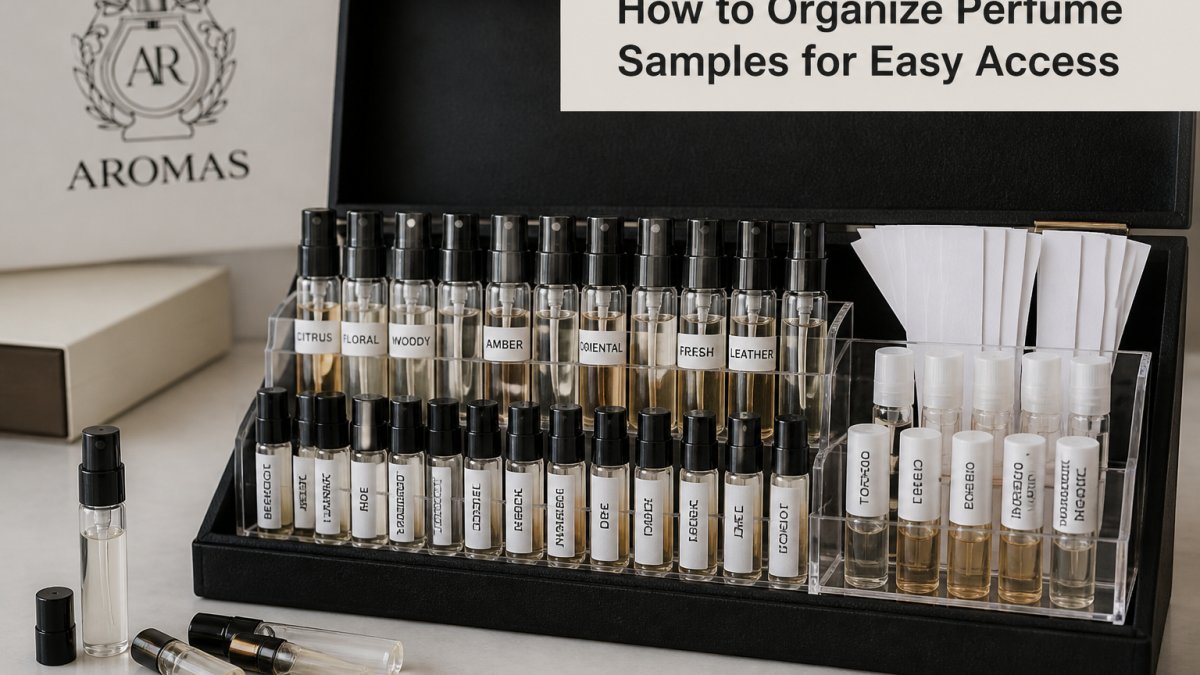
Simple organization systems:
Start with categories that make sense to you:
- By scent family (floral, woody, fresh, spicy)
- By brand or fragrance line
- By mood or occasion (work, evening, casual)
- By intensity (light, moderate, strong)
Pick one system and stick with it. The best system is the one you'll actually use.
Labeling is essential:
- Label each vial with the fragrance name
- Add the brand if you have multiple brands
- Include the date you received it
- Use a permanent marker or printed labels
Clear labels save time. You won't have to open vials to remember what they are. This also reduces unnecessary air exposure.
Keep a simple inventory:
- Write down what you own
- Note the size of each sample
- Track which ones you've tried
- This prevents buying duplicates
An inventory spreadsheet takes five minutes to create and saves hours of confusion later. Include columns for fragrance name, brand, size, date received, and notes on how you like it.
Can Perfume Samples Go Bad and How Long Do They Last
Fragrance samples don't expire in the traditional sense, but they do deteriorate. The timeline depends on storage conditions, vial type, and the fragrance itself.
General timeline for properly stored samples:
- First 6 months: peak freshness, no noticeable change
- 6-12 months: still excellent, minor changes possible
- 1-2 years: good, but some fragrances may shift slightly
- 2+ years: depends on storage quality and fragrance type
Fragrances with higher alcohol content tend to last longer. Lighter, fresher scents (citrus, aquatic) fade faster than deeper ones (woods, ambers, musks).
Signs Your Samples Have Deteriorated
You don't need lab equipment to tell if a sample has gone bad. Your nose is the best detector.
Visual signs:
- Discoloration or cloudiness in the liquid
- Separation of liquid layers
- Visible particles or sediment
- Dried-out or cracked cap
Scent changes:
- The fragrance smells noticeably different than when you first got it
- The scent is significantly weaker or muted
- Off-notes appear (sour, vinegary, or chemical smells)
- The longevity on skin drops dramatically
Other indicators:
- The vial feels light (liquid has evaporated)
- The cap is loose or won't seal properly
- Liquid has leaked inside the storage box
If you notice any of these signs, the sample has deteriorated. You can still wear it if you want, but it won't perform as intended.
How Long Do Perfume Samples Last
Storage conditions are everything. A sample stored in a dark, cool closet lasts much longer than one sitting on a sunny windowsill.
In ideal conditions (cool, dark, sealed):
- Most samples stay fresh for 1-2 years
- Premium fragrances may last 2-3 years
- Some vintage or rare fragrances last even longer
In poor conditions (warm, bright, or humid):
- Many samples degrade within 3-6 months
- Some may change noticeably within weeks
The difference is dramatic. A sample stored properly can last three times longer than one stored carelessly.
Choosing a Perfume Sample Organizer
The right organizer keeps your samples protected, organized, and easy to access. You have several options depending on your collection size and aesthetic preferences.
What makes a good organizer:
- Opaque or dark-tinted material (blocks light)
- Secure closure to control humidity
- Compartments or dividers to prevent rolling
- Easy to open and close without damaging vials
- Compact enough to fit in a closet or drawer
Storage Box and Drawer Options
A storage box is the simplest solution. You can use a dedicated fragrance storage box or repurpose a container you already have.
Dedicated storage boxes:
- Designed specifically for fragrance samples
- Usually include dividers or compartments
- Often made of dark plastic or wood
- Typically hold 20-50 samples depending on size
DIY alternatives:
- Small jewelry boxes with compartments
- Desk organizer boxes with drawers
- Decorative wooden boxes
- Clear plastic organizers placed inside a dark drawer
The key is choosing something opaque or dark-tinted. Clear plastic boxes work fine if you store them in a dark closet or cover them with a dark cloth.
Drawer storage:
- Use a dedicated drawer in a bedroom or closet
- Add dividers or small boxes inside to organize vials
- Keep the drawer closed to block light
- Easy access when you want to choose a fragrance
Drawers are ideal if you have the space. They naturally block light and keep humidity stable.
Racks and Holders for Small Vials
If you prefer to display your collection, use a rack or holder designed for small bottles. These work best in low-light areas like closets or shelves away from windows.
Types of holders:
- Test-tube racks (designed for laboratory use, work perfectly for samples)
- Small shelf units with multiple tiers
- Wall-mounted organizers with hooks or pockets
- Tiered display stands
Important: If you use a display rack, place it in a dark location. A closet shelf with the door closed is better than an open shelf.
Test-tube racks are especially practical. They hold vials upright, prevent rolling, and are inexpensive. You can find them online for just a few dollars.
Storing fragrance samples properly is simple, but it requires intention. Choose a cool, dark location. Keep vials sealed and upright. Control humidity. Organize your collection so you actually use it.
When you order hand-decanted samples from AR Aromas, you're investing in quality fragrances curated by passionate fragrance enthusiasts. Proper storage ensures you get the full value of that investment.
Frequently Asked Questions
Can perfume samples go bad if stored improperly?
Yes, fragrance samples can deteriorate when exposed to heat, light, humidity, or air. Improper storage accelerates oxidation and evaporation, causing the scent to weaken or change. Sealed vials stored in cool, dark conditions can preserve fragrance for 1-3 years or longer, while exposed or poorly sealed samples may degrade within months. Signs of degradation include discoloration, cloudiness, or a noticeably altered scent profile.
How long do perfume samples actually last?
Under ideal storage conditions, fragrance samples typically remain fresh for 1-3 years. The exact duration depends on the fragrance composition, vial material, and seal quality. Alcohol-based fragrances tend to last longer than oil-based samples. Properly sealed glass vials stored away from temperature fluctuations and direct sunlight preserve scent longevity best. Travel and everyday samples exposed to temperature changes may degrade faster than long-term storage kept in consistent cool environments.
Should I store fragrance samples in the bathroom?
No, bathrooms are poor storage locations for fragrance samples. Bathrooms experience frequent temperature fluctuations, high humidity, and moisture exposure from showers and baths, all of which damage samples. Humidity accelerates oxidation and evaporation, shortening fragrance lifespan. Choose a cool, dry closet, drawer, or cabinet away from moisture sources instead. If you use samples during travel, store them in your luggage or a cool room rather than in hotel bathrooms.
What's the best way to organize a large fragrance collection?
Organize samples by scent family (floral, woody, fresh, oriental), fragrance concentration, or personal preference. Use a dedicated storage box, drawer organizer, or vial rack to keep samples upright and separated. Label each vial with the fragrance name, brand, and date received to track inventory and identify aging samples. Store everyday samples separately from long-term collection pieces. A perfume sample organizer with compartments or a test-tube rack works well for accessibility while maintaining proper storage conditions.