

Niche Perfume Samples for Beginners: A 2026 Guide
Table of Contents
- Why Niche Perfume Samples Are the Smartest Way to Start
- Niche Perfume Discovery Sets: What to Look For
- Perfume Sample vs Decant: Key Differences Explained
- How to Test Perfume Samples: A Step-by-Step Method
- How to Choose a Signature Scent From Your Samples
- Budgeting for Niche Perfume Samples and Full Bottles
- Authenticity, Storage, and Safe Purchasing
- Conclusion: Start Sampling With Confidence
- Frequently Asked Questions
Last Updated: October 9, 2026
Why Niche Perfume Samples Are the Smartest Way to Start
Niche perfume samples for beginners are small, hand-decanted vials of authentic fragrance that let you test a scent on your own skin before committing to a full bottle.
Blind buying is the problem. A niche fragrance can cost hundreds of dollars, and a notes list tells you almost nothing about how a scent will wear on you.
Below, we break down how discovery sets work, how to test a sample properly, and how to turn a handful of vials into a signature scent.
Niche Perfume Discovery Sets: What to Look For
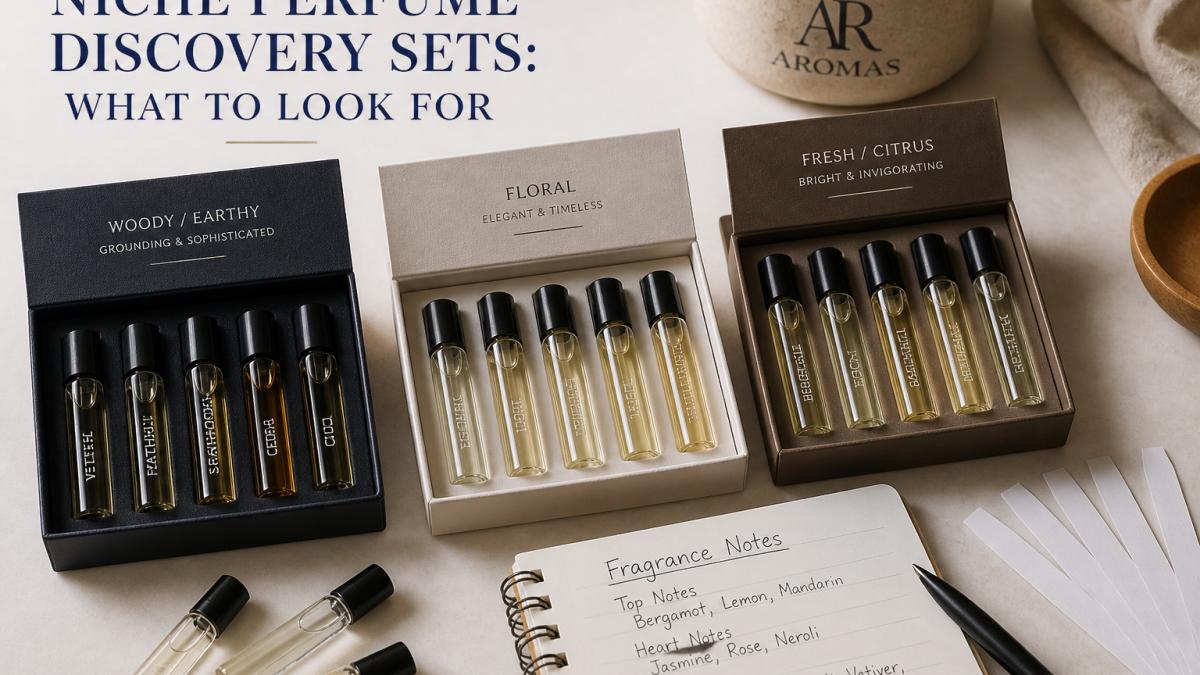
A niche perfume discovery set is a curated selection of sample vials grouped around a theme, such as a fragrance house, a note, or a mood. The fastest way to judge one is how it is organized, not how many vials it contains.
Look for four things:
- A clear organizing principle. Sets built around a fragrance family, a perfumer, or a house's signature style beat random assortments. Five ambers teach you more than five unrelated bestsellers.
- Wearable formats. Spray vials let you test the fragrance the way you would wear it. Dabbers are fine for a first impression but make projection harder to judge.
- Honest labeling. Every vial should show the fragrance house, concentration (EDT, EDP, parfum), and release year. If the listing hides the concentration, you cannot compare samples fairly.
The Main Types of Discovery Sets
Most beginner-friendly sets fall into one of four structures:
- House sampler. Every vial comes from one fragrance house. Best for understanding a brand's style before committing to a bottle.
- Note-focused set. All vials share a hero note, such as vanilla, iris, oud, or vetiver. Best for learning how one ingredient behaves across compositions.
- Fragrance-family set. Vials span a family like fresh citrus, aromatic fougère, or warm amber. Best for finding your family.
- Build-your-own. You pick individual vials from a catalog. Best once you know which notes and houses to explore.
For a beginner, start with a house sampler or note-focused set. Both give you a controlled comparison, which builds scent vocabulary. Once you know whether you lean toward fresh citrus, warm amber, or green vetiver, switch to building your own.
Curated Sets vs. Build-Your-Own Sampling
Curated sets are the faster path: someone experienced has filtered the noise, so you spend less time guessing and more time smelling.
Build-your-own sampling gives you control, but assumes you already know which notes and houses to explore, and tends to cost more per vial without a bundle discount.
A practical middle path: buy one curated set to establish a baseline, then use build-your-own to chase the two or three notes that stood out.
What a Reasonable Starter Set Costs
Discovery sets are usually priced per vial, with a modest discount for buying several at once.
Also factor in shipping, which can change the math on a small order, and check that the seller ships glass vials with tight seals.
Perfume Sample vs Decant: Key Differences Explained
A perfume sample is a small manufacturer or retailer vial, typically 1-2 milliliters, intended as a trial. A decant is a larger portion, hand-poured from a full bottle into a separate atomizer, usually 5-10 milliliters.
Format |
Typical Size |
Best For |
Relative Cost |
|---|---|---|---|
Manufacturer sample vial |
1-2 ml |
First sniff, quick verdict |
Lowest |
Hand-decanted spray |
5-10 ml |
Multi-day testing, travel |
Moderate |
Travel size |
10-15 ml |
Regular use, gym bag |
Higher |
Full bottle |
50-100 ml |
Signature scent commitment |
Highest |
The practical difference is how many wears you get. A 2 ml vial gives a few test sprays; a 10 ml decant can last weeks of regular wear, which matters for judging longevity and projection across a full day.
Sample Sizes, Vial Formats, and Pricing
At AR Aromas, our hand-decanted samples start at $4.99 and run to $6.99 depending on the fragrance. That range buys a genuine test of a scent like Creed Original Vetiver or a Frédéric Malle composition without the full-bottle outlay.

How to Test Perfume Samples: A Step-by-Step Method
Testing a sample properly takes a few days, not a few minutes. Follow this method for a real answer instead of a first-impression guess.
- Prep your skin. Spray on clean, moisturized skin, never on fabric.
- Spray one fragrance per wrist. Two scents maximum per session so your nose stays sharp.
- Note the opening immediately. Write down your first reaction in one or two words.
- Wait 30 minutes. This is the heart, where the fragrance settles into its real character.
- Check the dry-down at hour four. This is what you will actually live with all day.
- Wear it a second day. A fragrance that impressed you once may bore you by day two.
- Log it. Keep a running list of what you tried, what you liked, and what you would buy.
Evaluating a Fragrance Over Time: Top Notes to Dry-Down
A fragrance moves through three stages. Top notes are the bright opening that fades within minutes. Heart notes emerge after 20-30 minutes and define its personality. Base notes arrive after an hour and can last for hours, shaping longevity and sillage.
Judge a scent on its dry-down, not its opening. Plenty of fragrances open beautifully and turn sharp or flat once the alcohol burns off. That is exactly what a sample is for.
How to Choose a Signature Scent From Your Samples
Your signature scent is the one you reach for without thinking. Getting there is less about finding one perfect fragrance and more about a short, structured elimination. Most beginners skip the structure, buy on impulse, and end up with bottles they rarely wear.
Here is a repeatable path from a pile of vials to one or two keepers.
Step 1: Sort Your Samples Into Three Piles
After you have tested a dozen or so samples, lay them out and sort them into three piles:
- Yes. You would wear it again tomorrow without hesitation.
- Maybe. You liked something about it but not the whole picture.
- No. It turned sharp, flat, or simply wrong on your skin.
Be ruthless with the No pile: a fragrance you have to talk yourself into is not a signature candidate. The Maybe pile holds the useful information, because the reason a scent landed there usually points to a specific note or accord you dislike.
Step 2: Read the Pattern, Not the Fragrance
Write down the notes shared by your Yes pile and your No pile. Patterns show up fast: a beginner may love bright citrus openings but dislike powdery iris hearts, or love vanilla bases but find oud too heavy.
This is the step most beginners skip and the one that saves the most money. Sampling without reading the pattern is just shopping.
Step 3: Match the Scent to How You Actually Live
A signature scent has to fit your real conditions, not an imaginary one. Ask four questions about each finalist:
- Occasion. Desk job, workshop, evenings out, or all of the above? A heavy, sweet fragrance can be wonderful at night and oppressive in a shared office.
- Climate. Heat amplifies projection and sweetness; cold mutes both. A scent that blooms in mild spring can turn cloying in humid summer, and light citrus can disappear in winter air.
- Intensity tolerance. Do you want people to notice you across a room, or only when they lean in? This decides whether you shop extraits and strong eau de parfums or lighter eau de toilettes.
- Frequency. Wearing one fragrance most days calls for something versatile; if you rotate, you can afford a more specific, louder scent.
A fragrance that scores well on all four is a genuine signature candidate. One that only works for a narrow occasion is better treated as a rotation piece.
Step 4: Run the One-Week Test
Narrow your shortlist to three fragrances and wear each for a full week, one per week, to work, errands, and home. Do not re-spray unless you normally would.
If none of the three survives the week, that is useful, not a failure: your Yes pile was built on openings rather than dry-downs. Go back to Step 2 with that in mind.
A Quick Decision Path for Your Next Order
Use this to choose what to sample next instead of buying at random:
- You like fresh and citrus but want more depth: sample aromatic fougères and green vetivers.
- You like sweet and warm but find many too heavy: sample ambers and tonka-forward compositions in lighter concentrations.
- You like clean and soft: sample musks and light florals rather than heavy orientals.
Budgeting for Niche Perfume Samples and Full Bottles
Sampling is cheaper than blind buying, but only if you plan. A common approach is a monthly sampling budget treated as entertainment, not a purchase toward a bottle.
A $6 sample worn five times costs about $1.20 per wear. A full bottle you regret costs the full price every time you look at it.
Authenticity, Storage, and Safe Purchasing
Authenticity is the biggest concern for first-time sample buyers, and it should be. A decant is only as good as the bottle it came from.
Here is what to check before you buy:
- Source transparency. A reputable seller names the original fragrance house and the concentration.
- Storage conditions. Fragrances should be kept cool, dark, and away from direct sunlight.
- Vial quality. Glass vials with tight seals protect the juice better than plastic.
Store samples upright in a drawer, away from heat and light.
Conclusion: Start Sampling With Confidence
Building a fragrance wardrobe you love starts with testing, not spending. The beginner who samples widely and tests patiently ends up with a collection that fits; the blind buyer ends up with expensive bottles gathering dust.
AR Aromas offers authentic, hand-decanted niche perfume samples with fast shipping, so you can discover your next signature scent without a full-bottle commitment. Browse our curated selection, choose your options, and start building a collection that reflects your taste.
Frequently Asked Questions
What is a niche perfume?
A niche perfume is a fragrance made by a smaller, specialized house rather than a mass-market designer brand. Niche houses typically use higher concentrations of quality ingredients and produce limited runs, which is why full bottles often cost $150 to $400 or more. Because of that price, many beginners start with niche perfume samples to explore the scent profile before committing to a full bottle.
How many perfume samples should I try at once?
Try no more than two or three samples per week. Your nose fatigues quickly, and smelling too many fragrances in one sitting makes it hard to judge each one fairly. Give each sample its own day so you can experience the top notes, heart notes, and dry-down without interference. A discovery set of five to eight samples is a comfortable starting point.
How long should you wear a perfume sample before deciding?
Wear a sample for a full day, ideally eight to twelve hours, before deciding. Top notes fade within 15 to 30 minutes, heart notes emerge over the next one to three hours, and the dry-down can take six hours or more to fully develop. A fragrance that smells sharp at first may become warm and inviting by evening, so a quick sniff is never enough.
What is the difference between a perfume sample and a decant?
A perfume sample is a small vial, usually 1 to 2 milliliters, sold or given by the brand. A decant is fragrance transferred from a full bottle into a smaller travel-size atomizer, typically 5 to 10 milliliters, by a third party. Decants let you test a niche fragrance over several wearings and often cost less per milliliter than official samples.
Are niche perfume discovery sets worth it?
For beginners, yes. A discovery set lets you try five to ten fragrances for the price of one full bottle, so you learn what notes and fragrance families you actually enjoy. Even without a credit, the cost per sample is usually lower than buying individual vials.
How can I find a niche fragrance I will actually wear?
Start by identifying two or three notes you already enjoy in designer fragrances, then seek samples built around those notes. Wear each one for a full day and note how it changes. After testing eight to ten samples, patterns emerge: you may gravitate toward woody aromatics, fresh citruses, or amber florals. That pattern points to your signature scent.