

How to Build a Fragrance Collection: The 2026 Guide
Table of Contents
- Start With Scent Families, Not Bottles
- How to Find Your Signature Scent Through Sampling
- Build a Fragrance Wardrobe by Occasion
- How Many Perfumes Should You Own?
- How to Store Perfume So It Lasts
- Budgeting Your Fragrance Collection With Cost Per Wear
- Common Mistakes That Bloat a Fragrance Collection
- Conclusion
- Frequently Asked Questions
Last Updated: October 21, 2026
Start With Scent Families, Not Bottles
Most people build a fragrance collection backwards. They buy a bottle because a friend wears it or an ad caught their eye, then spend months working out whether they actually like it.
A fragrance family is a classification system that groups perfumes by their dominant notes and overall character. The system gives you a shared language for comparing scents and predicting what you'll enjoy.
The Five Families and What They Smell Like
- Fresh: citrus, green, aquatic, and aromatic notes. Think bergamot, lemon, and herbs. Light and clean, best for daytime.
- Floral: rose, jasmine, neroli, and orange blossom. Ranges from delicate to rich and heady.
- Woody: sandalwood, cedar, vetiver, and patchouli. Dry, grounded, and often unisex.
- Oriental (amber): vanilla, resins, spices, and musk. Warm, sweet, and long-lasting.
- Gourmand: edible notes like vanilla, caramel, and tonka bean. Sweet and cozy.
Most people gravitate toward two families. Find yours before you buy anything.
How to Find Your Signature Scent Through Sampling
Your signature scent is the fragrance you reach for without thinking, and finding it takes structured testing rather than one quick spritz at a counter. Sampling is the only reliable method.
The practical route is a discovery set or a handful of small decants. Decants are hand-transferred portions of an original bottle, which lets you try niche and designer scents at a fraction of full-bottle cost. Order samples across different families, then test them one at a time.
Where to Buy Samples Safely
Sampling only saves money if the sample is authentic. Counterfeit and mislabeled decants are common online, and a fake sample teaches you nothing about the real fragrance. A few habits reduce the risk:
- Buy from established decanters and sample services with a public track record, clear bottle-origin claims, and a return policy. Avoid marketplace listings with no seller history.
- Prefer sealed manufacturer discovery sets when you can find them. These come directly from the brand and remove the authenticity question entirely.
- Check the packaging details. Authentic decants usually arrive in labeled glass atomizers with the fragrance name and batch code where available. Vague or missing labels are a warning sign.
- Be skeptical of prices that are too low. A niche fragrance decant priced far below the market rate for that volume is usually not what it claims to be.
- Ask about batch codes. Reputable sellers can tell you which batch a decant came from, which matters because fragrance formulas and ingredients shift slightly between batches.
Run a Proper Wear Test
- Spray on skin, not paper. Paper strips hide how a fragrance reacts to your skin chemistry.
- Apply to a pulse point like the wrist or inner elbow, one fragrance per day.
- Note the opening in the first fifteen minutes. This is where top notes live.
- Check the heart at the two-hour mark. Middle notes define the fragrance's character.
- Judge the dry-down after six to eight hours. Base notes are what linger on skin and clothes.
- Log longevity and projection. Note how far the scent carries and how long it lasts.
- Re-test the finalists on a second day before committing.
Set a Sampling Budget Before You Start
A sampling budget keeps exploration honest. Decide what you're willing to spend on samples in a given month, then allocate it across a few families rather than chasing every new release. A common pattern is to spend a fixed monthly amount on samples and only buy a full bottle when a sample has been worn at least several times and still feels like something you'd reach for weekly.
Build a Fragrance Wardrobe by Occasion
A fragrance wardrobe is a small, deliberate set of scents chosen to cover the situations you actually dress for, rather than a shelf of bottles bought on impulse. The goal is coverage, not volume.
Start by listing the situations you actually face in a typical month. If you work in an office five days a week, daytime coverage matters most. If you go out most weekends, evening wear earns a slot earlier. The point is to buy for your real life, not an aspirational one.
A Step-by-Step Starter Plan by Use Case
The table below maps each use case to a scent family, a concrete example, and the reason it works. Treat the examples as reference points, not requirements: any fragrance in the same family will do the same job.
| Use Case | Family to Target | Example Scent | Why It Works |
|---|---|---|---|
| Office / daytime | Fresh citrus, aromatic | Creed Original Vetiver | Clean, green, professional; won't overwhelm a room |
| Warm weather | Citrus, fig, light floral | Acqua di Parma Fico di Amalfi | Bright and breezy without heaviness |
| Evening / date night | Leather, amber, woody | Tom Ford Ombré Leather | Bold and warm, built for after dark |
| Cold weather / cozy | Gourmand, vanilla | Mancera Roses Vanille | Sweet, rich, and long-lasting |
| Signature / all-rounder | Clean musk, citrus | Frederic Malle Cologne Indélébile | Fresh but persistent; works anywhere |
How to Sequence the Purchases
Don't buy the whole wardrobe at once. Build it in three stages so each purchase informs the next:

- Start with two. Buy or sample one daytime fresh scent and one evening warmer. These cover the majority of wear for most people and teach you which families you reach for without thinking.
- Add weather coverage. Once you know your daytime and evening preferences, add one warm-weather scent and one cold-weather scent. Choose these last because season-specific bottles get the fewest wears and are the easiest to overbuy.
- Fill the signature slot last. A signature scent is the one you wear most often, so it should be the fragrance you've tested the longest. Wait until you've cycled through samples for at least a few months before committing to a full bottle.
Match Concentration to the Use Case
Concentration matters as much as family. Eau de toilette (EDT) typically carries 5-15% fragrance oil and suits office and daytime wear because it sits closer to the skin. Eau de parfum (EDP) usually runs 15-20% and works better for evening and cold weather, where you want more projection and longevity. Parfum and extrait concentrations go higher still and are best reserved for special occasions or for scents you want to last all day.
How Many Perfumes Should You Own?
Most people need three to five fragrances, not thirty. A collection of three to five bottles covers day, evening, warm weather, cold weather, and a signature, which is every situation most people face.
The number that's right for you depends on how often you wear fragrance and how much variety you genuinely enjoy. If you wear scent daily, five is comfortable. If you wear it a few times a week, three is plenty.
How to Store Perfume So It Lasts
Proper storage is the difference between a fragrance that smells right for years and one that turns sour in months. Heat, light, and air are the enemies.
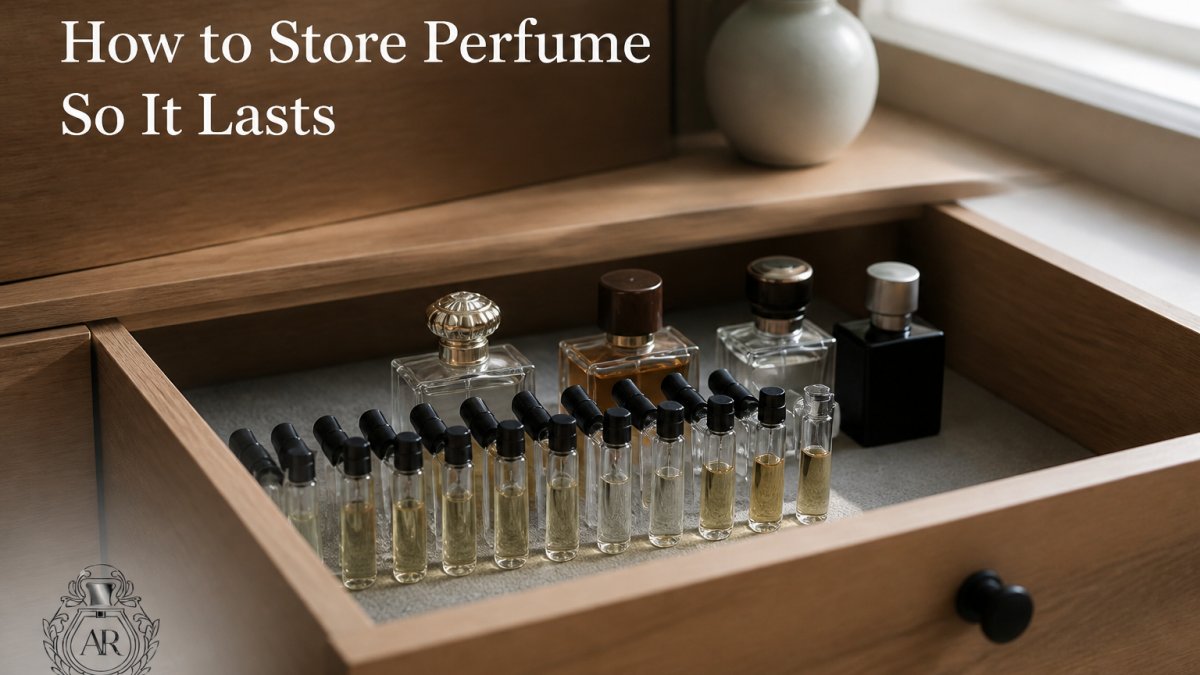
Keep the cap on tight and avoid shaking bottles. Splashes and decants should be kept sealed and upright, and travel sizes belong in a padded case rather than a hot car or a checked bag.
Budgeting Your Fragrance Collection With Cost Per Wear
Cost per wear is the price of a fragrance divided by the number of times you actually wear it, and it's the most honest way to judge whether a purchase is worth it.
Samples and decants change the equation. A small decant lets you test a scent across many wears for a few dollars, so you learn whether it earns a place in your wardrobe before you spend on a bottle.
Common Mistakes That Bloat a Fragrance Collection
The fix is simple: sample first, test across full days, and only buy a full bottle once a sample has earned it.
A few more traps worth naming. Buying the largest size to "save money" backfires if you never finish it. Ignoring storage turns good bottles bad. And treating a collection as a numbers game, where more bottles feels like more value, misses the point: a fragrance collection is worth what you wear, not what you own.
Conclusion
Building a fragrance collection that you actually wear comes down to discipline: learn the families, sample before you buy, test across full days, and let cost per wear guide your spending. It's a challenge to resist the impulse buy, but the reward is a wardrobe where every bottle earns its place.
That's where AR Aromas helps. We offer authentic perfume decants and hand-decanted samples of niche and designer scents, so you can explore widely and test properly before committing to a full bottle.
Frequently Asked Questions
How do you start a fragrance collection from scratch?
Begin with samples, not full bottles. Order discovery sets or decants across the main scent families, wear each one for a full day, and note how it develops from the opening to the dry-down. Once two or three scents keep earning repeat wear, buy a larger size. A first fragrance collection of three to five bottles covers daytime, evening, and warm-weather use without wasting money on scents you never reach for.
Should you buy perfume samples before a full bottle?
Yes, almost always. A fragrance can smell completely different after four hours on your skin than it does on a paper strip, and skin chemistry changes how the dry-down reads. Samples let you test longevity, projection, and whether a scent suits your routine before committing to a full bottle. At AR Aromas, samples start at $3.99, so testing five scents costs far less than one blind full-bottle purchase.
How many fragrances should a beginner own?
Three to five is a practical starting point. Aim for one fresh everyday scent, one warmer evening option, and one for hot weather or the office. That spread handles most occasions without redundancy. Add more only when you notice a real gap, such as a formal event or a season your current lineup does not cover. A fragrance collection grows best when every bottle has a clear job.
How do you rotate fragrances in a collection?
Keep a small tray of three or four current favorites within reach and store the rest in a dark, cool drawer. Rotate seasonally, moving citrus and fresh scents forward in summer and woody, amber, or gourmand options in winter. Tracking wear tests in a notes app helps you see which bottles you actually use. Rotating also gives each fragrance a rest, which keeps your nose sharp to its opening notes.
How should you store a perfume collection?
Store perfume away from light, heat, and humidity. A closed drawer or box in a bedroom works better than a bathroom shelf, where steam and temperature swings speed up breakdown. Keep bottles upright with caps tight, and leave samples in their vials rather than decanting into open containers. Stored this way, most fragrances stay in good condition for years, though citrus-forward scents tend to fade sooner than resinous or woody ones.
How do you choose fragrances for different occasions?
Match concentration and family to the setting. An eau de toilette in a citrus or fresh family suits daytime, offices, and warm weather because it sits closer to the skin. An eau de parfum with leather, amber, or vanilla notes carries better for evening wear and cool weather. Build your fragrance wardrobe around those two poles first, then add a formal option and a seasonal scent as your collection grows.